

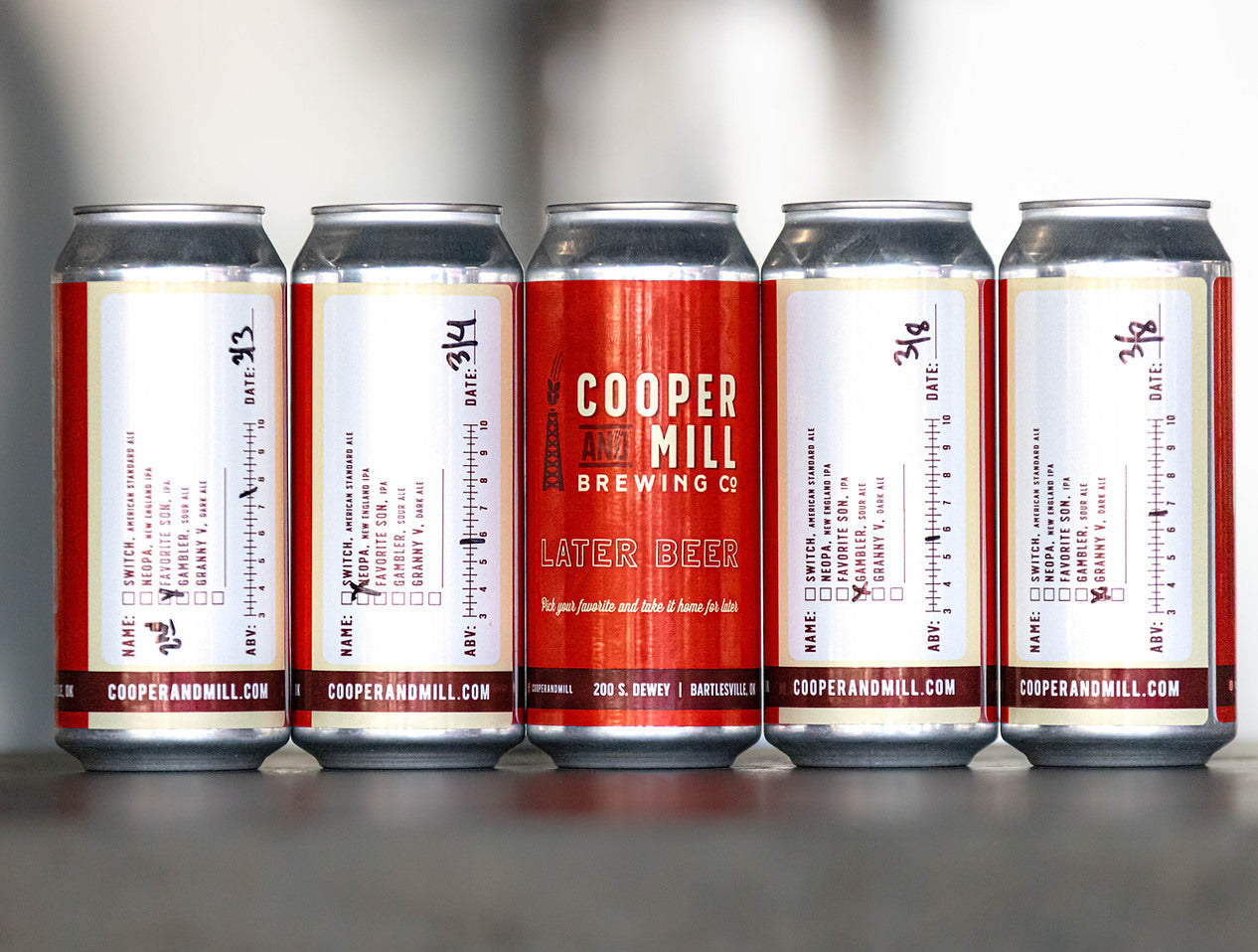
How a small brewery gained fermentation visibility, consistency, and time back—without adding staff
Customer Snapshot
Brewery: Cooper & Mill Brewing Co.
Location: Bartlesville, Oklahoma
System Size: 7-barrel brewhouse
Annual Capacity: ~ 1,000 barrels/year
Core Styles: Kveik-driven ales, experimental variants, and a flagship Lachancea sour
Primary Role: Shawn Childress (former Owner/Brewer)*
Founded by chemist-turned-brewer Shawn Childress, Cooper & Mill is Bartlesville’s first locally-owned brewery. From the beginning, the brewery leaned into experimentation—pushing yeast strains, fermentation temperatures, and hybrid styles to create distinctive beers while operating with a lean team.
That curiosity-driven approach, however, came with operational tradeoffs.
The Challenge: Managing Fermentation Without Being There 24/7
As Cooper & Mill grew, fermentation management became increasingly difficult to balance with limited staffing—and Shawn’s full-time job outside the brewery.
Manual sampling was the norm. Gravity and pH pulls happened multiple times per day, often late at night, just to catch critical moments in fermentation. Temperature drops during colder months could slow or stall batches if they weren’t caught in time. For mixed-fermentation beers, timing was even more critical—missing the right pH window could add days to a process or compromise quality.
After my day job, I’d head down to the brewery, but waiting all day to take readings and make adjustments was becoming stressful,” Shawn recalls.
At the same time, Cooper & Mill was training the next generation. Shawn’s son, Asher, was stepping into a brewing role—eager, capable, but still learning how to read a fermentation instinctively.
The brewery needed a way to:
-
Reduce manual sampling and tank checks
-
Gain visibility outside cellar hours
-
Catch fermentation deviations early
-
Maintain quality while training new brewers
All without adding staff or complexity.
The Solution: Turning Tanks Into Smart Tanks with Sennos
Cooper & Mill deployed the SennosM3 in-tank monitoring platform, paired with Sennoslink for real-time visibility and alerts, and SennosIQ for deeper fermentation intelligence and benchmarking.
What They Monitor
Using the multi-sensor SennosM3 hardware, Cooper & Mill continuously tracks:
-
Gravity (real-time fermentation progress)
-
pH (critical for souring and yeast performance)
-
Temperature (especially during cold-weather ferments)
-
Pressure (early signals of abnormal activity)
All data streams directly into Sennoslink, accessible from mobile or web—no manual sampling required to understand what’s happening inside the tank.
How Daily Workflows Changed
Instead of pulling samples two to three times per day, Shawn and his team now rely on live fermentation curves and alerts.
-
Temperature drops are flagged immediately, allowing fast corrections.
-
pH changes are visible in real time—especially critical for beers like The Gambler, Cooper & Mill’s Lachancea-based sour.
-
Fermentation progress can be checked remotely, eliminating unnecessary trips to the brewery.
“Before Sennos, we had to manually pull pH multiple times a day. Now we can follow the pH drop from our phones and know the minute it hits the right range—even if it’s the middle of the night.”
That visibility allows the team to intervene precisely when it matters—pitching yeast, adjusting temperature, or moving the beer forward without delay.
The Results: Measurable Time Savings and Better Outcomes
Operational Impact
-
~ 70% reduction in manual sampling
-
Multiple hours saved per week previously spent on tank checks and late-night trips
-
Fermentation timelines shortened by several days for sour beers by hitting exact pH targets
“Now that we can catch the timing exactly, we’ve been able to reduce the process by several days,” says Shawn.
Quality & Consistency Gains
For a small brewery without extensive lab resources, SennosIQ has become a virtual quality safety net.
By comparing live fermentations against historical data, the team can quickly see when a yeast isn’t performing as expected—or when temperature or pressure trends indicate potential issues.
“As a small brewery, we don’t have a lot of lab capabilities. Seeing when a yeast doesn’t take off or when something looks off tells us early that it’s time to act.”
In one case, Sennos data helped Cooper & Mill diagnose a stalled fermentation and adjust yeast strategy—saving a batch that would likely have been dumped otherwise.
Training, Confidence, and Peace of Mind
One of the most unexpected benefits has been education.
As Asher stepped into a larger brewing role, Sennos became a shared reference point—turning fermentation into something visible, teachable, and less dependent on years of intuition.
“With Asher still learning, having the data gives me peace of mind. I can see what’s happening and flag issues early. Those real-time teaching moments are incredibly valuable.”
Instead of hovering over tanks, Shawn can coach with confidence—knowing that every fermentation is being continuously monitored.
Why It Matters for Small Breweries
For Cooper & Mill, Sennos didn’t replace brewing skill—it amplified it.
The combination of SennosM3 hardware, Sennoslink real-time visibility, and SennosIQ fermentation intelligence allowed the brewery to:
-
Protect quality without increasing labor
-
Experiment confidently with new yeast and styles
-
Scale consistency while training new brewers
-
Spend less time reacting—and more time brewing
We learn a lot from the data Sennos provides, Shawn says. It’s invaluable—even for a smaller brewery like ours.
Takeaway
You don’t need a large team or a full lab to brew consistently. With the right fermentation intelligence, even a small brewery can operate with clarity, confidence, and control.
Brew with confidence—even when you’re not there.
Schedule a free Sennos demo to see how real-time fermentation visibility helps small breweries save time and protect every batch.
*Shawn and his son, Asher are no longer affiliated with Cooper & Mill.
Share:
Terrapin Beer Co.: Fermentation Clarity to 100,000 Barrels
Froth Technologies: Scaled Yeast Quality and Production Confidence